Staff Engineer at Qualcomm, Bristol, UK

Dr. Qasim Sultan

I design the signal processing that lets wireless devices find each other, lock on and stay connected, and I take it all the way from research papers to silicon.

QPSK symbols as a receiver corrects carrier frequency offset. Tracking…

Selected work

Algorithms I’ve designed, shipped and argued for, across industry and research.

Huawei, 2022–2025

Timing tracking for Bluetooth Long Range and NearLink

I developed the timing tracking algorithm for Bluetooth Long Range and NearLink receivers, taking it from simulation to a fixed-point design that shipped in commercial devices worldwide.

  • Bluetooth LE Long Range
  • NearLink
  • Synchronisation
  • Fixed-point

Qualcomm and Huawei, 2022–present

Shaping the Bluetooth standard

I represent my company in the Bluetooth SIG: proposing new features, reviewing other members’ technical contributions and building the data-driven case that moves standardisation decisions. This work, alongside throughput improvements, earned me Huawei’s Future Star Award.

  • Bluetooth SIG
  • High Data Throughput
  • Standards strategy

Qualcomm, 2025–present

Bluetooth PHY algorithms ready for silicon

I design PHY signal processing for next-generation Bluetooth and turn it into optimised floating- and fixed-point implementations that balance performance, power and silicon area. I work closely with RTL and verification teams to debug system-level issues on the way to tape-out.

  • Bluetooth PHY
  • Fixed-point design
  • RTL collaboration

Chung-Ang University with Asia Pacific Satellite Inc., 2017–2022

Downlink synchronisation for 5G non-terrestrial networks

I led algorithm development for an NR modem built for satellite links: carrier frequency offset and symbol timing offset tracking, plus random access procedures, all implemented in fixed point for constrained hardware.
  • 5G NR
  • NTN
  • CFO/STO tracking
  • Random access
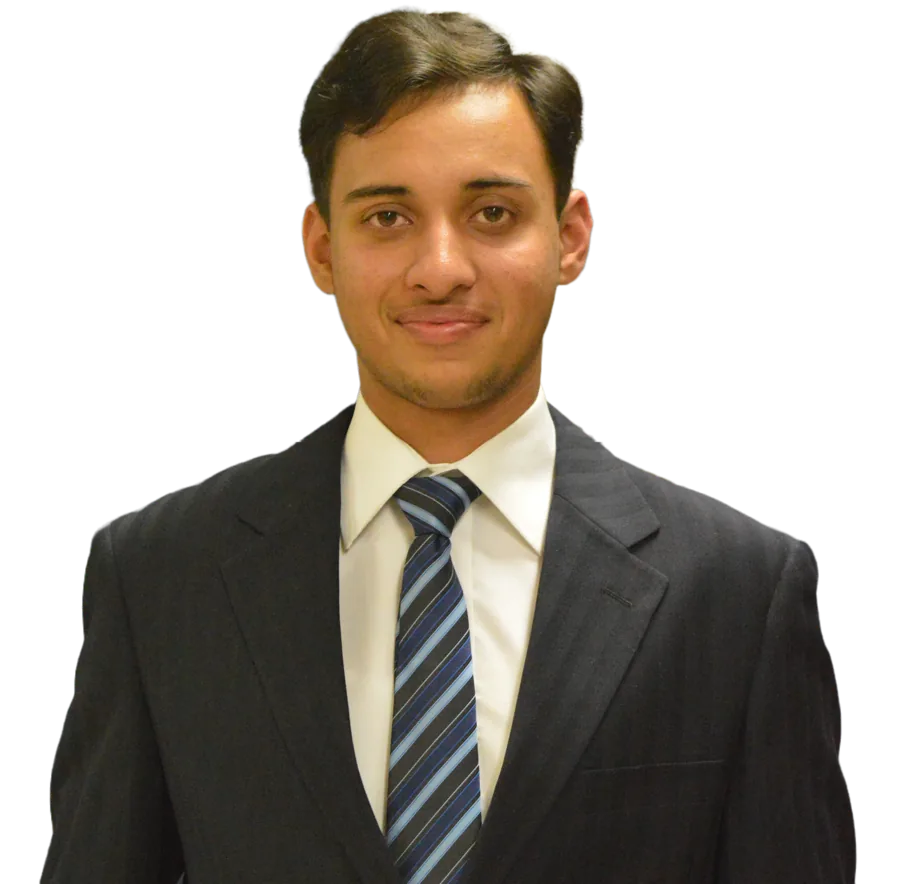
Portrait of Qasim Sultan

The engineer behind the algorithms

I’m a Staff Engineer at Qualcomm in Bristol, where I design Bluetooth PHY algorithms and turn them into fixed-point implementations that are ready for silicon. I also represent Qualcomm in the Bluetooth SIG.

Before that I spent three years at Huawei in Singapore working on Bluetooth and NearLink, and five years at Chung-Ang University in Seoul, where I completed my PhD on 5G/6G beamforming and non-terrestrial networks.

What I enjoy most is the whole journey: an idea on a whiteboard, then simulation, then a paper or a standards contribution, and finally an algorithm running inside a chip.

8+ years
in wireless research and industry
12 publications
in IEEE Access, Sensors, ICTC and VTC
4 countries
Pakistan, South Korea, Singapore and the UK
Bluetooth SIG
contributor to standardisation

What I work on

Bluetooth PHY and standards

Receiver algorithms for Bluetooth LE, Long Range and High Data Throughput, and the standards work that decides what the next generation of Bluetooth looks like.

Synchronisation for 5G/6G and NTN

Getting a receiver to find and hold a signal: timing and frequency offset estimation and tracking, from short-range links to satellites with extreme Doppler.

Millimetre-wave beamforming

Fast beam training and 3D beamforming for large antenna arrays and intelligent reflecting surfaces, the core of my PhD research.

  1. Sep 2025 – present

    Staff Engineer, Qualcomm

    Bristol, UK

    Bluetooth PHY algorithms, fixed-point design for silicon, Bluetooth SIG standardisation.

  2. Aug 2022 – Sep 2025

    Wireless Algorithm Engineer, Huawei

    Singapore

    Bluetooth and SparkLink/NearLink PHY algorithms. Future Star Award.

  3. Aug 2017 – Jul 2022

    Graduate Research Associate, MS leading to PhD, Chung-Ang University

    Seoul, South Korea

    5G/6G, beamforming and NTN research on industry and government projects. CGPA 4.32/4.5, Chung-Ang Young Scientist Scholarship, BK21 fellowship.

  4. 2013 – 2017

    BEng, Electrical (Telecommunications) Engineering, COMSATS University

    Islamabad, Pakistan

    Final-year project: OFDM implementation and performance analysis on USRP.

Journal articles

  1. 2021
    Downlink Synchronization for OTFS-Based Cellular Systems in High Doppler Environments

    M. S. Khan, Y. J. Kim, Q. Sultan, J. Joung and Y. S. Cho. IEEE Access, vol. 9, pp. 73575–73589.

  2. 2021
    Fast Beam Training Technique for Millimeter-Wave Cellular Systems with an Intelligent Reflective Surface

    Q. Sultan, Y.-J. Kim, M.-S. Khan and Y.-S. Cho. Sensors, vol. 21, no. 14, p. 4936.

  3. 2020
    Fast 3D Beamforming Technique for Millimeter-Wave Cellular Systems With Uniform Planar Arrays

    Q. Sultan, M. S. Khan and Y. S. Cho. IEEE Access, vol. 8, pp. 123469–123482.

  4. 2020
    Pilot Sequence Design for mmWave Cellular Systems With Relay Stations in the Presence of Blockage

    Y. J. Kim, Q. Sultan and Y. S. Cho. IEEE Access, vol. 8, pp. 80454–80467.

Conference papers

  1. 2022
    Downlink Synchronization in New Radio (NR) Non-Terrestrial Networks (NTN)

    Q. Sultan, S. Ha, S. Choi and Y. S. Cho. ICTC 2022, Jeju Island, Korea, pp. 1351–1353.

  2. 2021
    Fast Beam Search for IRS-Assisted Cellular Systems

    Q. Sultan, Y.-J. Kim, M. S. Khan and Y. S. Cho. ICTC 2021, Jeju, Korea.

  3. 2020
    Fast Beamforming Technique for Large Antenna Arrays

    Q. Sultan, M. S. Khan and Y. S. Cho. ICTC 2020, Jeju, Korea, pp. 45–47.

  4. 2020
    Position and Machine Learning-Aided Beam Prediction and Selection Technique in Millimeter-Wave Cellular System

    M. Saquib Khan, Q. Sultan and Y. Soo Cho. ICTC 2020, Jeju, Korea, pp. 603–605.

  5. 2020
    Pilot-based Sequence Design to Overcome a Blockage in mmWave Cellular Systems

    Y. J. Kim, Q. Sultan and Y. S. Cho. ICTC 2020, Jeju, Korea, pp. 42–44.

  6. 2020
    Beam Search Algorithm for Large Antenna Arrays Reducing Beam Search Time

    Q. Sultan and Y. S. Cho. KICS Winter Conference.

  7. 2020
    Relay-Assisted mmWave Cellular System for Overcoming Blockage Problem

    Y. J. Kim, Q. Sultan and Y. S. Cho. KICS Winter Conference.

  8. 2018
    Cell Selection Technique for 5G Millimeter-Wave Cellular Systems

    M. S. Khan, M. Asim, Q. Sultan and Y. S. Cho. IEEE VTC Fall, Chicago, USA.

Invited talk

“Beamforming for advanced communications systems”, Calian SED, Saskatoon, Canada.

Toolkit

Languages
  • MATLAB
  • C/C++
  • Python
Methods
  • Fixed-point design
  • High-performance link simulation
  • Timing and frequency synchronisation
  • Beamforming and beam tracking
Standards
  • Bluetooth LE, Long Range and HDT
  • SparkLink/NearLink
  • 5G NR and NTN
Also trained in
  • Machine learning (Stanford, via Coursera)
  • Deep learning
  • CCNA routing and switching

Let’s talk wireless

If you’re working on short-range wireless, 5G/6G or anything in between, I’d like to hear from you. Email is the best way to reach me.

qasimsultan6@gmail.com